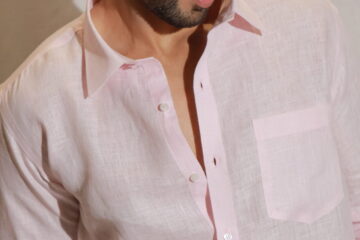
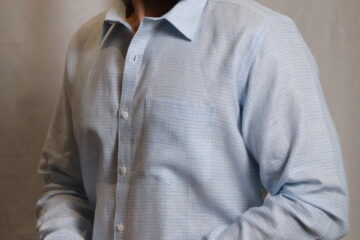
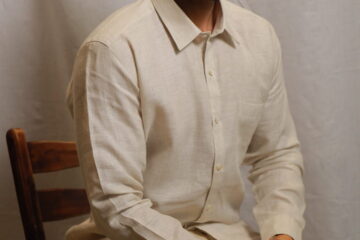
In business settings, credibility begins with structure. A well-constructed linen shirt, especially in solid neutral shades such as white, light blue, muted olive, or soft beige, communicates composure without appearing rigid. Premium linen woven with controlled density ensures that natural creasing appears intentional rather than untidy.
The key to styling linen shirts for office wear lies in balance. Pairing them with tailored trousers or structured chinos maintains alignment with business casual dress codes. Avoid overly loose silhouettes. A tailored fit that sits cleanly on the shoulders and tapers subtly along the torso preserves a professional outline.
Search behavior shows increasing queries for phrases like “linen shirts for office,” “business casual linen outfits,” and “formal linen shirts for men.” This reflects a broader shift toward breathable workwear, especially in warm climates such as Mumbai and other metropolitan markets.
Layering for Formal Structure
In more formal professional settings, layering enhances polish. A linen shirt under a lightweight blazer creates visual depth while preserving airflow. Neutral tones such as ivory or pale blue complement navy and charcoal jackets effectively.
The advantage of linen in this context lies in temperature regulation. Traditional cotton shirts may trap heat during extended working hours. Linen’s natural fiber structure promotes ventilation, making it particularly suitable for tropical and humid conditions.
Footwear also influences perception. Minimal leather shoes or loafers reinforce the professional tone, while overly casual footwear may diminish the shirt’s elevated construction.
Transitioning to Weekend Styling
The same linen shirt that functions in a professional setting can seamlessly transition into weekend wear. This versatility is one of linen’s strongest commercial advantages for retailers and brands.
For relaxed settings, rolling sleeves slightly and pairing the shirt with tailored denim or soft chinos creates a balanced smart casual look. Subtle prints or textured weaves become more appropriate in informal environments, allowing personality without overpowering the garment.
Modern consumers often search for “smart casual linen outfits” and “how to wear linen shirts casually.” The demand reflects a desire for adaptable wardrobes rather than single-use clothing.
The Importance of Fabric Quality
Not all linen performs equally. Lower-grade linen may appear limp or excessively wrinkled, affecting styling outcomes. Premium linen fabrics, when woven and finished properly, maintain structure while softening over time.
Fit precision also determines styling success. A linen shirt that drapes cleanly along the shoulders and chest elevates the overall silhouette. Excess fabric or poorly aligned seams can undermine even the finest material.
For B2B buyers and retailers, offering well-constructed linen shirts addresses growing consumer expectations for quality and durability.
Seasonless Versatility and Long-Term Value
Although often associated with summer, linen is increasingly styled across multiple seasons. In moderate climates, it can be layered with knitwear or jackets. In warmer regions, it becomes a primary fabric choice year-round.
The ability to function across professional and leisure contexts enhances its value proposition. Instead of maintaining separate wardrobes for office and weekend wear, men can rely on versatile linen pieces that adapt to both.
For brands operating in the premium segment, this adaptability supports long-term customer loyalty and reduced seasonal volatility.
Linen shirts are no longer niche garments. When styled with intention and constructed with precision, they serve as foundational pieces in the modern man’s wardrobe.
Rock Apparels develops premium linen shirts designed to move effortlessly between professional structure and relaxed refinement. To explore thoughtfully crafted linen menswear collections built for both work and weekend versatility, visit https://rockapparel.co.in/